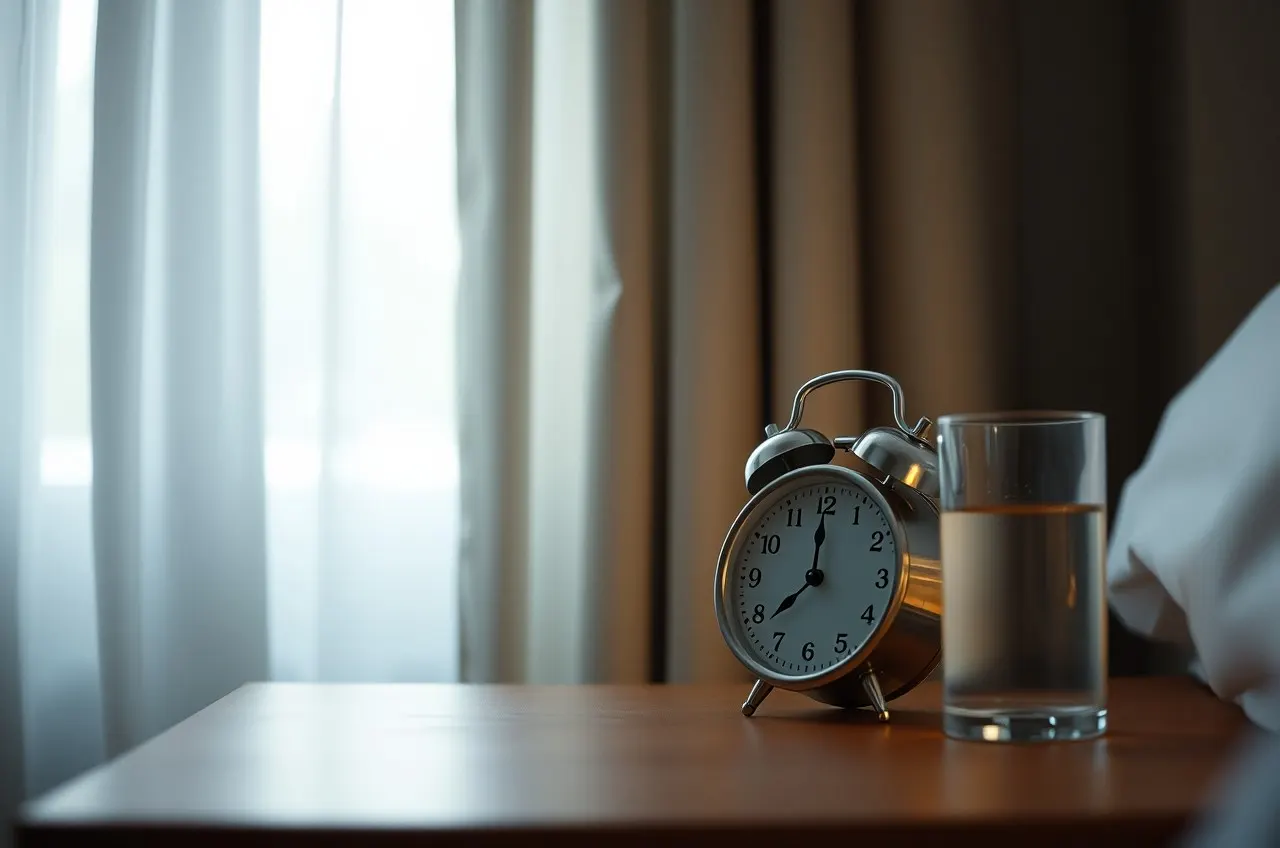
Your body was never designed to be alert at 2 a.m. and asleep at noon. Working against that isn't a discipline problem — it's a physics problem.
India's BPO, IT support, healthcare, and manufacturing sectors run enormous numbers of night and rotating shifts, and the sleep complaints that come with them are remarkably consistent: hard to fall asleep during the day, easy to feel foggy and understimulated at 3 a.m., and a nagging sense of never being fully rested on either schedule. This isn't a motivation problem. It's a direct conflict between a work schedule and a biological clock that takes its cues from daylight, and understanding that distinction changes what's actually worth trying.
Why day sleep is fundamentally harder than night sleep
The body's circadian clock, driven largely by light exposure hitting the eyes, expects wakefulness during daylight and sleep during darkness — a rhythm reinforced over an entire lifetime and not easily overridden by a work roster. When a night-shift worker tries to sleep during the day, they're not just fighting external noise and light; they're fighting an internal signal telling the body it should be awake. Åkerstedt's widely cited review of shift work (Occupational Medicine, 2003) documents that day sleep after night work is reliably shorter and more fragmented than night sleep, even under otherwise similar conditions — a finding that holds regardless of how disciplined or well-intentioned the worker is about their sleep routine.
This is the basis for shift work sleep disorder, described in sleep medicine literature (Sack et al., Sleep, 2007) as a circadian rhythm disorder in its own right — not a character flaw, and not something that "toughening up" resolves. It's characterised by excessive sleepiness during required wake periods and difficulty sleeping during intended rest periods, both driven by the same underlying mismatch.
What genuinely helps
Control light exposure aggressively. Bright light — including screens and daylight — after a night shift, on the commute home, delays the body's transition toward sleep. Wearing dark sunglasses on the way home and using blackout curtains at home are two of the highest-yield, lowest-effort interventions available to shift workers, because they directly address the mechanism (light-driven circadian signalling) rather than working around it.
Protect a consistent sleep block, even on off days. The temptation on a day off is to revert to a "normal" daytime schedule, but constantly flipping between night-shift sleep timing and daytime sleep timing is harder on the body than staying on one schedule consistently, even an unconventional one. Where the roster allows it, keeping sleep timing similar across work and off days reduces the repeated re-adjustment cost.
Use caffeine strategically, not habitually. A dose early in the shift, timed to avoid interfering with the sleep period that follows, is more useful than caffeine spread evenly across the whole shift, which tends to both fail to prevent the low-alertness period around 3–5 a.m. and linger long enough to disrupt the sleep that follows.
Treat the commute as part of the sleep schedule, not separate from it. Bright morning light on the way home after a night shift is one of the most sleep-disruptive parts of the entire routine, and it's also one of the easiest to control with sunglasses and a direct route home rather than errands run in daylight before bed.
Make the sleep environment work harder than it would need to for night sleep. Daytime ambient noise and light are working against you by default, so blackout curtains, white noise, and a phone on silent matter more for day sleepers than for anyone sleeping on a conventional schedule.
Rotating shifts versus fixed night shifts
Rotating schedules — a week of days followed by a week of nights, for instance — are consistently harder on sleep than a stable, even if unconventional, fixed schedule, because the internal clock never gets far enough into adapting before it has to shift again. Where there's any flexibility in scheduling, a longer stretch on the same shift type before rotating, and rotating forward (day → evening → night, rather than backward) tends to be easier on the body's adjustment, a pattern well documented in shift-work chronobiology research.
What this does to health if unmanaged
This isn't only about feeling tired on shift. Sustained circadian disruption is linked in the research literature to broader metabolic and cardiovascular effects over time — echoing the same mechanisms covered in our guide on chronic stress and sleep — precisely because the body's hormonal rhythms (cortisol, melatonin, and appetite-regulating hormones) are themselves tied to the same clock the shift schedule is disrupting. A single rough month on nights is common and usually recoverable. Years of unmanaged, poorly adapted shift work is a different risk profile, and worth treating as such.
When it's more than "the schedule is hard"
If shift-related sleep problems have persisted despite genuinely trying the strategies above — light control, a consistent sleep block, careful caffeine timing — for more than a few weeks, or if excessive daytime sleepiness has started to affect safety (falling asleep at the wheel, difficulty staying alert during safety-critical tasks), that's worth a structured evaluation rather than more self-management. A doctor can assess for shift work sleep disorder specifically, check for compounding factors like an undiagnosed sleep disorder — see our guide on sleep apnea — and help build a plan suited to your actual roster rather than generic daytime-sleeper advice that doesn't apply.
Night shifts aren't going away for a huge share of India's workforce. But "this is just how it is" and "this is being managed as well as it can be" are two very different states — and it's worth knowing which one you're actually in.
Talk to a doctor
If shift work has left you exhausted on and off the clock for months, an NMC-registered doctor on Kyros can help you build a plan suited to your actual schedule. Take the assessment.
References
- Åkerstedt T. Shift work and disturbed sleep/wakefulness. Occupational Medicine, 2003.
- Sack RL, et al. Circadian rhythm sleep disorders: part I. Sleep, 2007.
- Watson NF, et al. Recommended amount of sleep for a healthy adult: a joint consensus statement. Sleep, 2015.
For general information only; not a substitute for your own doctor.