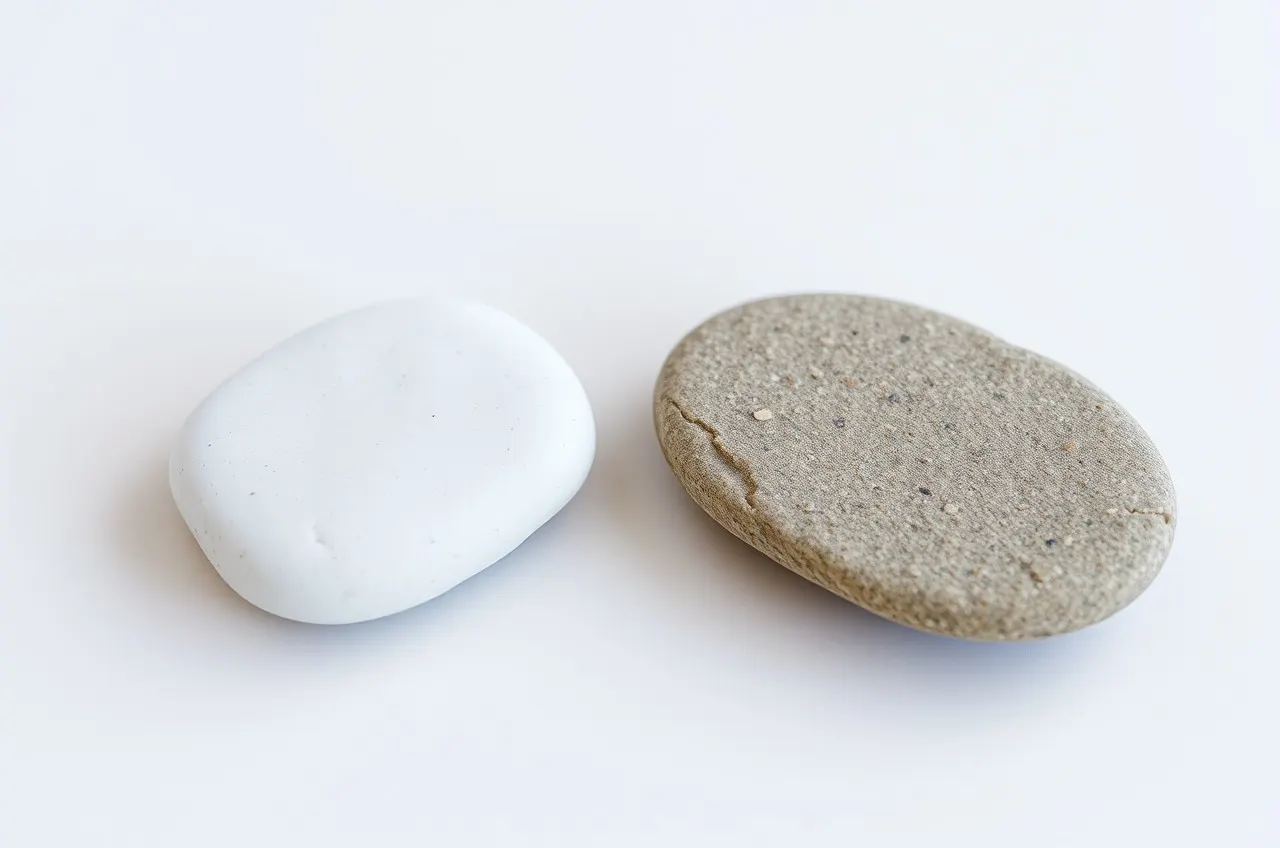
The breakout healed months ago. What's left behind isn't a mark that will simply fade — and treating it like one usually means disappointment.
Acne scars and acne marks get used interchangeably in everyday conversation, but they are genuinely different things that respond to different care. Confusing the two — treating a real scar like it's a fading mark, or vice versa — is one of the most common reasons people feel like "nothing works" on their post-acne skin. Here's the actual distinction, and what a doctor can realistically offer.
Scar vs mark: the distinction that matters
A mark — usually post-inflammatory hyperpigmentation, or PIH — is flat discolouration. The skin's texture underneath is unchanged; only the colour is different. Marks fade over weeks to months on their own, faster with good sun protection. This is covered in detail in our hyperpigmentation and PIH guide.
A scar is a change in the skin's actual structure — a dip, a pit, an indentation, or occasionally a raised area — left after deeper inflammation damaged the skin's supporting layer during healing. Run a finger lightly over the area with your eyes closed: if you can feel a change in texture, not just see a colour difference, you're likely dealing with a scar rather than a mark. Scars do not fade with time the way marks do, because the underlying structural change doesn't resolve on its own.
Both can occur on the same face from the same history of acne, which is part of why "just wait it out" advice frustrates people — the mark portion genuinely will fade, but the scar portion won't, and no amount of extra waiting changes that.
The common types of acne scars
Dermatologists generally describe atrophic (depressed) acne scars in a few recognisable shapes:
- Icepick scars — narrow, deep, pointed indentations, often the hardest type to address because of how deep and narrow they run.
- Boxcar scars — broader, more box-shaped depressions with defined edges.
- Rolling scars — shallower, wave-like depressions that give the skin an uneven texture rather than sharp pits.
Less commonly, acne can also leave raised, thickened scarring rather than depressions. Which type — or combination — you have affects what a dermatologist would realistically recommend, which is one reason a proper assessment matters more than a generic "scar cream" approach.
Why scars form in the first place
Scarring happens when inflammation from a breakout goes deep enough to damage the skin's collagen framework during the healing process. Deeper, more inflamed, cystic breakouts are more likely to scar than superficial ones — which is part of why treating active, severe acne early matters beyond just the immediate breakout. Picking, squeezing, or popping spots substantially raises the risk of scarring by increasing the depth and duration of inflammation. Our guide on adult acne covers the acne side of this in more depth — preventing new scars starts with managing the acne causing them.
What actually helps, realistically
The honest starting point: no treatment removes scarring entirely. What dermatology-guided care can realistically offer is meaningful improvement in texture and appearance over a course of treatment, tailored to your specific scar type and skin. Broadly, options a dermatologist might discuss include:
- Topical care, which can support skin texture and collagen over time for milder scarring, always matched to your skin type and used under guidance rather than guesswork.
- In-clinic procedures, such as certain resurfacing or skin-remodelling treatments, which require hands-on, in-person delivery and cannot be performed over a video call. These are typically considered for more pronounced scarring after an initial assessment.
- A staged approach, since meaningful scar improvement is usually a multi-session process over months, not a single visit or product.
Anyone promising a single product or a single session will fully erase acne scarring is overselling what dermatology can honestly deliver — and that gap between promise and reality is exactly what leads people to try one product after another with no plan behind any of them.
What an online consultation can do here
An online dermatologist can look at your scarring pattern through clear photos, ask about your acne history, and give you an honest read on scar type and realistic expectations — the same clinical assessment that would happen in a clinic room. Where the plan includes topical care, that can be managed entirely through teleconsultation and follow-up. Where the plan includes an in-person procedure, your online doctor's role is to identify that need clearly and guide you toward it, rather than either attempting something that requires hands-on delivery, or leaving you without a next step.
This combination — honest assessment plus the right referral when needed — is usually more useful than searching independently for "best scar treatment," because it starts from what your specific skin actually needs rather than a generic product ranking.
Marks fade with patience. Scars need a plan. Knowing which one you're looking at is most of the battle.
Talk to a doctor
Not sure if what's left behind is a mark or a true scar? An NMC-registered dermatologist on Kyros can tell the difference and set realistic expectations. Take the assessment.
References
- Indian dermatology consensus on acne scarring. (Specific source to be confirmed by the reviewing dermatologist at publish.)
For general information only; not a substitute for your own doctor.