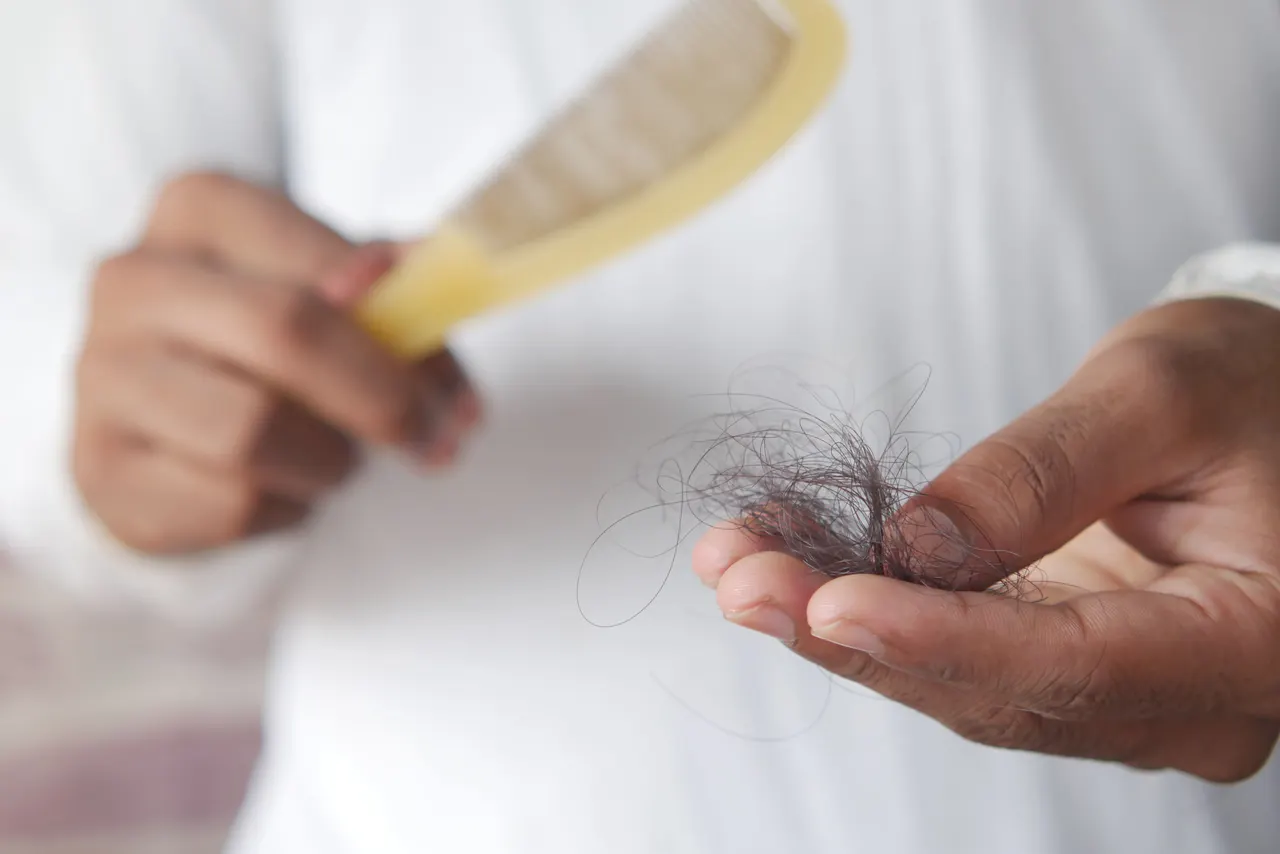
Hair on the pillow, hair in the drain — and a quiet worry that it isn't stopping.
Hair loss is one of the most common reasons Indians see a skin doctor, and it almost always has a findable cause. The key is that there is usually more than one reason at once, which is why a single shampoo or oil rarely fixes it. Here are the common causes, and the signs that mean it is time for a doctor rather than another product.
The common causes
1. Pattern hair loss (genetic). The most common cause. It follows a typical shape — a receding hairline or thinning crown in men, a widening parting in women. It runs in families. In Indian men, this affects a large share by the 30s and 40s.
2. Low iron and vitamin D. Both are very common in Indians and both cause shedding. Easily missed, easily tested.
3. Thyroid problems. A slow or fast thyroid thins hair evenly across the scalp (see thyroid and hair loss).
4. After a trigger. A heavy shed often follows a fever, illness, COVID, surgery, crash diet, or childbirth — usually a few weeks later, and usually temporary.
5. Stress and sleep. High stress and poor sleep push more hairs into the shedding phase.
6. Harsh hair practices. Tight hairstyles, excess heat, and harsh chemical treatments add to the load.
Not sure what you're seeing even counts as loss? Some daily fall is completely normal — hair fall vs hair loss tells the difference in a minute. This guide is about what usually causes it once the change is real.
When to see a doctor
See a doctor if:
- Shedding is sudden or heavy
- You can see the scalp through thinning hair
- There are bald patches or rapid change
- Hair loss comes with tiredness, weight change, or irregular periods (a hormone clue)
A doctor checks the pattern, runs simple blood tests (iron, vitamin D, thyroid), and identifies which causes are yours — because the right care depends entirely on the right cause.
Before the next bottle of oil, it's worth finding out what your scalp is actually telling you.
Talk to a doctor
Worried your hair fall isn't settling? An NMC-registered dermatologist on Kyros can find the cause and guide the right tests. Take the assessment.
For general information only; not a substitute for your own doctor.