There's a lot of online advice promising to "skyrocket" testosterone. The truth is quieter, honest, and still worth your attention.
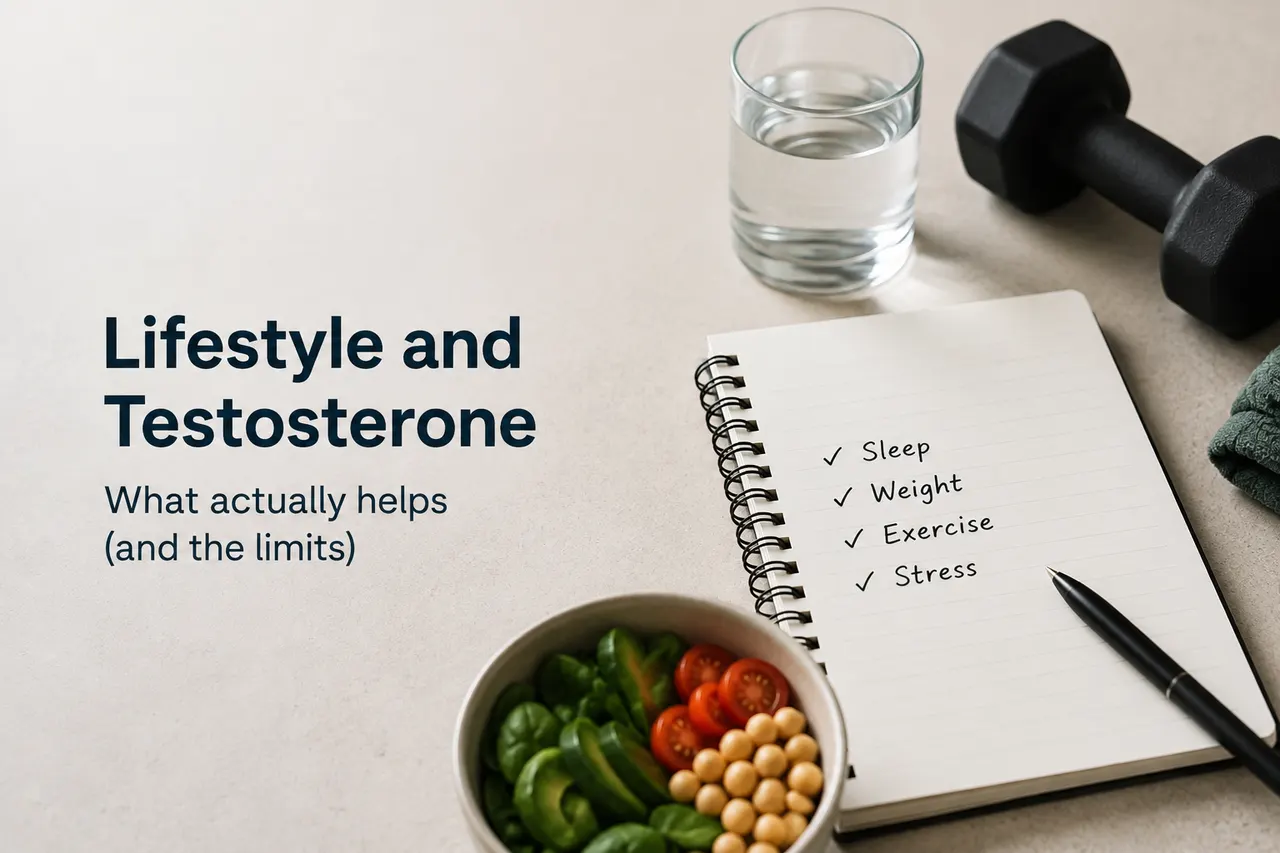
Can the way you live affect your testosterone? Yes — but within real limits. The everyday things that support overall health — sleep, weight, movement, less alcohol, less chronic stress — are genuinely linked to healthier testosterone levels. What lifestyle cannot do is replace medical care for a confirmed deficiency. So this guide is the honest version: what actually helps, and where the limits are.
What genuinely supports healthy testosterone
These are the factors with real backing:
- A healthy weight. Excess belly fat is one of the strongest factors pulling testosterone down. Losing some of it is one of the most effective things a man can do — and it breaks the weight–testosterone loop.
- Good sleep. Testosterone is largely made during sleep. Short or poor sleep — and untreated sleep apnoea, common in men who snore heavily — lowers it noticeably.
- Regular exercise, including strength work and staying generally active.
- Less heavy alcohol. Frequent heavy drinking suppresses testosterone.
- Managing chronic stress, which keeps stress hormones high and testosterone low.
- Correcting deficiencies like low vitamin D, common in India.
Notice the theme: these are simply the foundations of good metabolic health. That overlap is the point — see why metabolic health matters.
The honest limits
Here is the part the loud advice leaves out. For a man whose testosterone is low because of weight, sleep, or alcohol, improving those things can help meaningfully. But for a man with confirmed hypogonadism — a true medical deficiency from a gland or other cause — lifestyle alone will not correct it. No food, supplement, or routine "boosts" testosterone the way the internet claims, and chasing those promises wastes time and money.
This is why the right order is: support your health honestly, and get properly assessed if you have symptoms — rather than assuming one or the other is the whole answer.
What this means for you
Treat lifestyle as the strong, sensible foundation it is — good for your testosterone, your weight, your heart, and your energy all at once. But if you have lasting signs of low testosterone, pair those healthy habits with a proper medical check. Lifestyle and medicine are partners here, not rivals.
Live well because it genuinely helps — and get checked because some things lifestyle alone can't fix.
Talk to a doctor
Want to know whether your symptoms are lifestyle, medical, or both? An NMC-registered doctor on Kyros can sort it out honestly. Take the assessment.
References
- Yadav R, et al. Age-associated testosterone deficiency syndrome in Indian men. Advances in Urology, 2019.
For general information only; not a substitute for your own doctor.