The tiredness, the flatness, the lost drive — many men assume it's just age or stress. Sometimes it's a hormone.
Low testosterone (sometimes called "low T" or hypogonadism) is more common in Indian men than most realise — and it is frequently missed, because its signs look like ordinary stress and ageing. One study of Indian men aged 40 and above found symptoms of testosterone deficiency in close to half, with confirmed low levels in around 29% (Yadav et al., Advances in Urology, 2019). It is a real, diagnosable medical condition — not a lifestyle label.
The common signs
Low testosterone can affect energy, mood, body, and drive:
- Constant tiredness and low energy
- Low sex drive, and sometimes erectile difficulty
- Low mood, irritability, or feeling flat
- Loss of muscle and strength, and more body fat
- Poor concentration and reduced motivation
- Disturbed sleep
The problem is that each of these alone could be many things. It is the cluster together — especially low drive plus fatigue plus low mood — that raises the suspicion.
Why it gets missed
Two reasons. First, the symptoms are easy to blame on a stressful job or "getting older." Second, many men are tested incompletely — only total testosterone is measured, when free testosterone and SHBG often tell the fuller story. A "normal" total result can still hide low usable testosterone. We explain this in testosterone testing.
What your doctor checks
A proper check has two halves — symptoms and blood:
| Check | Why |
|---|---|
| Symptom review | Low T is diagnosed by symptoms and blood, not blood alone |
| Morning testosterone | Levels are highest in the morning; timing matters |
| Free testosterone + SHBG | Shows the usable hormone, not just the total |
| Related causes | Diabetes, obesity, thyroid, vitamin D, sleep, medicines |
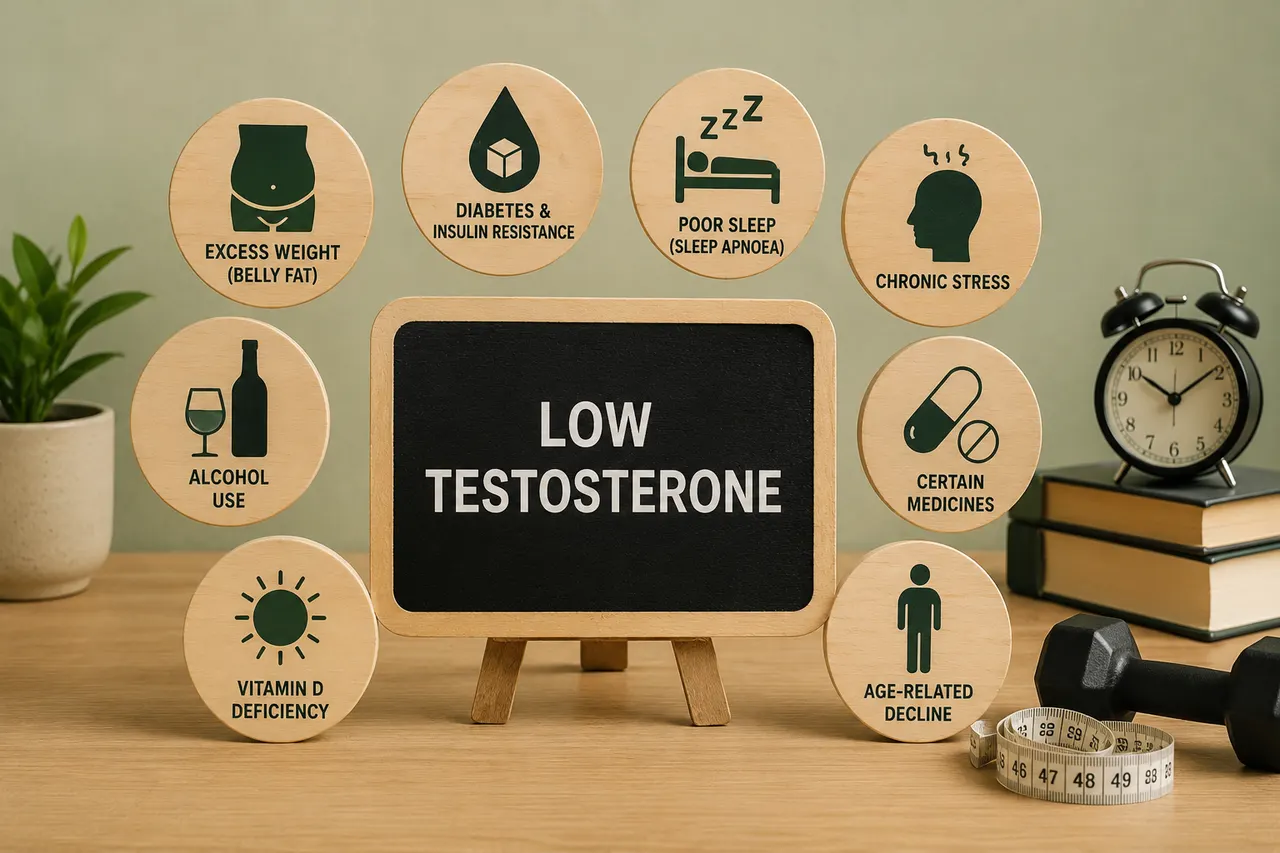
This matters because low testosterone is often a sign of something else — like diabetes or obesity — that also needs care (see what causes low testosterone).
When to see a doctor
See a doctor if several of these signs have lasted for weeks, especially low drive with fatigue and low mood. The honest path is test, confirm, and find the cause — not to self-diagnose or buy hormones online, which is both unsafe and often unnecessary.
Feeling permanently flat is a reason to get checked, not a reason to settle. The first step is a simple, well-timed blood test.
Talk to a doctor
Recognise the pattern? An NMC-registered doctor on Kyros can review your symptoms and guide the right tests. Take the assessment.
References
- Yadav R, et al. Age-associated testosterone deficiency syndrome in Indian men. Advances in Urology, 2019.
- Goel A, et al. Symptomatic hypogonadism in working-age Indian men. Indian Journal of Urology, 2009.
For general information only; not a substitute for your own doctor.