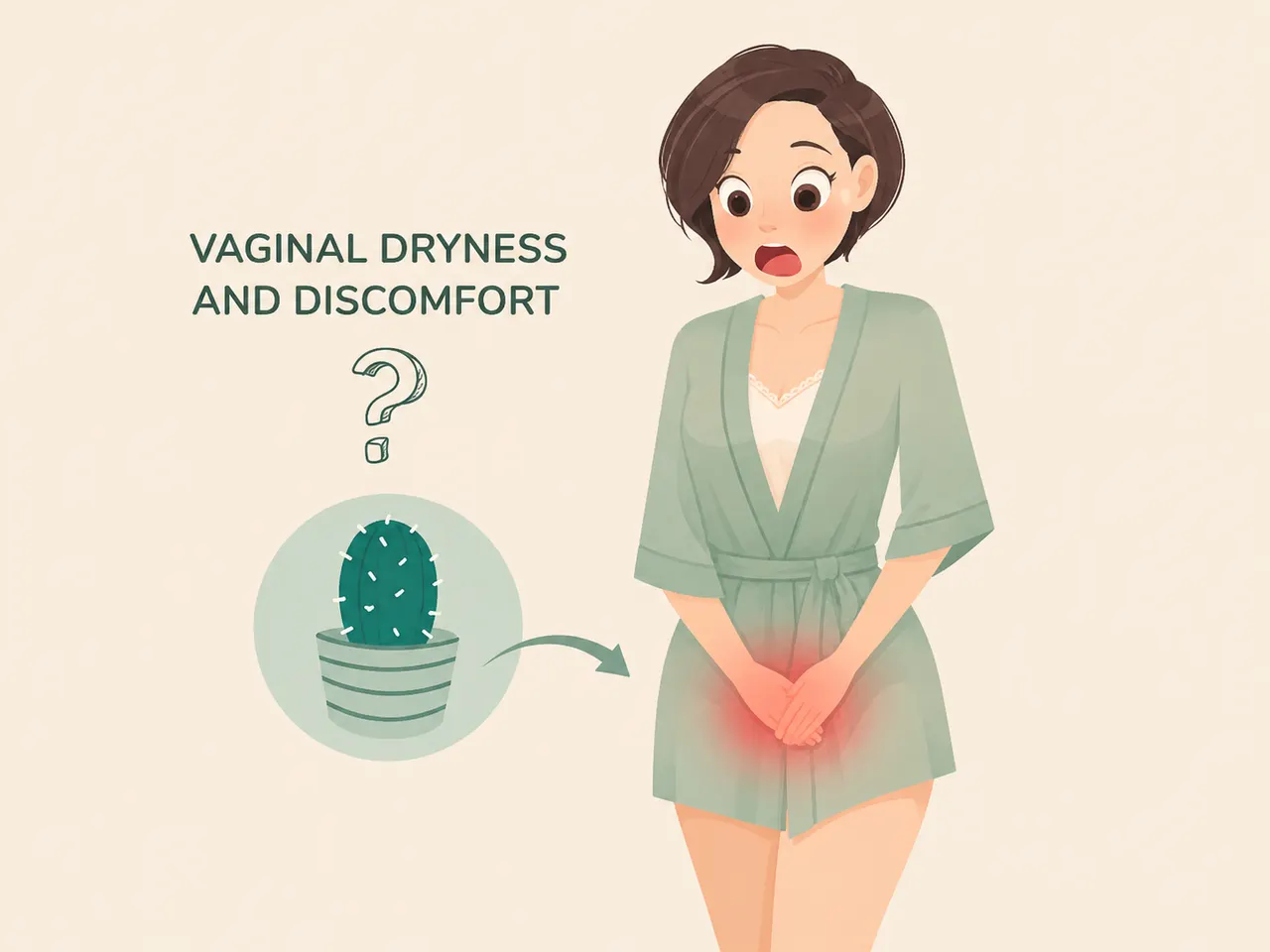
It's common, it's normal, and it's far more treatable than the silence around it suggests.
Vaginal dryness — and the discomfort, itching, or pain that can come with it — is something many women experience but few discuss. It is usually caused by lower oestrogen, the hormone that keeps these tissues comfortable and lubricated. The important message: it is common, treatable, and not something to simply endure.
When and why it happens
Dryness shows up most when oestrogen dips:
- Around and after menopause — the most common time
- After childbirth and while breastfeeding
- With certain medicines, including some hormonal and cancer treatments
- With some health conditions and high stress
- From irritants — harsh soaps, douches, or scented products in the intimate area
So while it is often linked to menopause, it is not only a menopause issue — younger women experience it too.
Why it matters beyond comfort
Dryness can quietly affect more than one area of life. It can make sex uncomfortable or painful (see painful sex causes), which can in turn lower interest in intimacy (see low libido in women). So a small physical change can ripple outward — which is exactly why addressing it early helps.
What can make it worse
A few common habits add to dryness or irritation:
- Washing the intimate area with harsh or scented soaps
- Douching, which disturbs the natural balance
- Ignoring discomfort until it becomes painful
Gentle care and plain water for the external area are usually kinder than "hygiene" products that promise freshness.
When to talk to a doctor
See a doctor if dryness brings:
- Discomfort or pain, including during sex
- Itching, burning, or soreness
- An effect on your daily comfort or relationship
These are routine, treatable concerns for a gynaecologist — and a private teleconsultation can make the conversation easier to start.
What a doctor does
A doctor identifies the cause — most often a hormone shift — and guides comfortable, appropriate care. Because the cause is usually clear and the relief is real, this is one of the more satisfying problems to bring to a doctor.
Discomfort isn't something you have to live with quietly. A short, private conversation usually leads to real relief.
Talk to a doctor
Bothered by dryness or discomfort? An NMC-registered gynaecologist on Kyros can help, privately and without judgement. Take the assessment.
References
- Indian gynaecology guidance on genitourinary symptoms. (Specific source to be confirmed by the reviewing doctor at publish.)
For general information only; not a substitute for your own doctor.