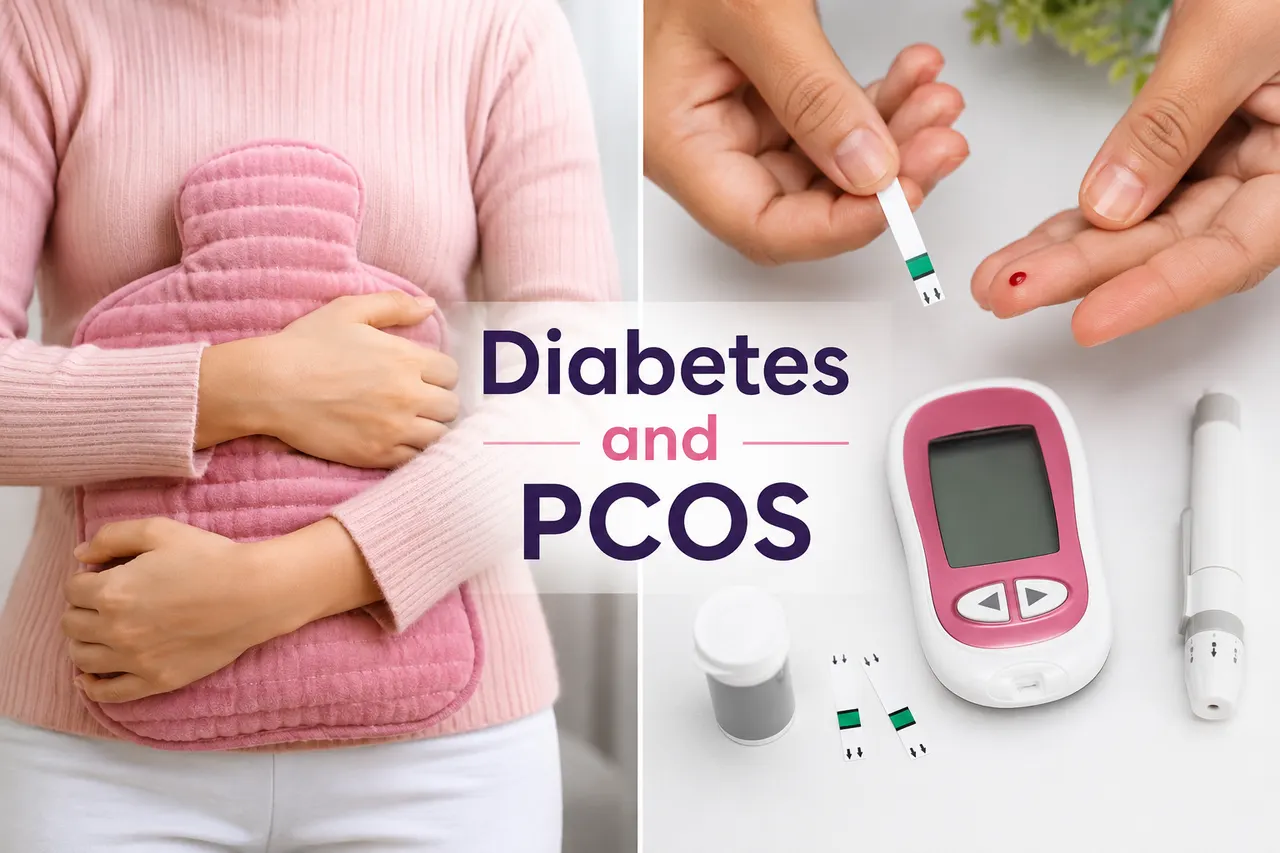
PCOS and diabetes can look like two separate conditions. Underneath, they often share the same root.
If you have PCOS, this is worth knowing: PCOS and type 2 diabetes are closely linked, because they often share the same underlying problem — insulin resistance. This connection is not a reason to worry needlessly; it is a reason to be aware and check regularly, because awareness is exactly what lowers the risk.
The shared root: insulin resistance
Both conditions frequently involve insulin resistance, where the body has to make more and more insulin to keep blood sugar normal. In PCOS, that extra insulin drives many of the symptoms — the weight, the irregular cycles, the skin and hair changes (see PCOS and weight gain). In diabetes, that same insulin resistance is what eventually pushes blood sugar up. Same root, two different branches.
This is why the two travel together so often: the engine underneath is shared.
What this means for women with PCOS
Because of this link, women with PCOS have a higher risk of prediabetes and type 2 diabetes than women without it. Important nuances:
- PCOS does not directly cause diabetes — it raises the risk through insulin resistance.
- That risk is not a certainty. Many women with PCOS never develop diabetes.
- The risk can be lowered with awareness, regular checks, and management.
So the message is empowering, not frightening: knowing the link lets you stay ahead of it.
What to check, and when
Sensible, doctor-guided monitoring makes the difference:
- Blood sugar and HbA1c checks, with the frequency your doctor advises
- Closer attention if you also have extra weight (especially around the belly) or a family history of diabetes
- Watching for early signs of diabetes and the prediabetes window
The good news in the connection
Here is the upside of a shared root: the things that help one often help the other. Improving insulin sensitivity — through weight, diet, movement, sleep, and a doctor's guidance — can improve PCOS symptoms and lower diabetes risk at the same time. One set of changes, two benefits. That is why managing PCOS well is also, quietly, looking after your future blood sugar.
Two conditions, one shared root. Tend the root, and you help both branches at once.
Talk to a doctor
Have PCOS and want to stay ahead of diabetes risk? An NMC-registered doctor on Kyros can guide the right checks and plan. Take the assessment.
References
- Ganie MA, et al. Prevalence and clinical features of PCOS in India (ICMR national study). JAMA Network Open, 2024.
- Anjana RM, et al. ICMR-INDIAB national study. Lancet Diabetes & Endocrinology, 2023.
For general information only; not a substitute for your own doctor.